
How to Prepare for a Kitchen Remodel: The 2026 Guide to a Stress-Free Transformation
What if the most daunting part of your kitchen transformation wasn’t the dust or the displaced dishes, but the lingering “what-ifs” that keep you up at night? You aren’t alone in fearing the transition from a functional home to a construction zone. It’s natural to feel a mix of excitement and anxiety when you’re learning how to prepare for a kitchen remodel while balancing the desire for dramatic natural stone slabs against the reality of a temporary living setup. Most homeowners feel that same tension between the vision of a beautiful gathering place and the logistical hurdles required to get there.
This guide provides a professional roadmap so you can navigate every phase with total confidence. We’ll walk you through setting a realistic timeline, mastering the art of material selection, and surviving the construction process without losing your peace of mind. By bridging the gap between conceptual design and professional execution, you’ll gain a clear path to a space that balances high-end aesthetics with enduring durability. From understanding Flagstaff permit requirements to setting up a functional makeshift scullery, we’ve organized the steps to ensure your journey is as seamless as your final results.
What You’ll Learn:
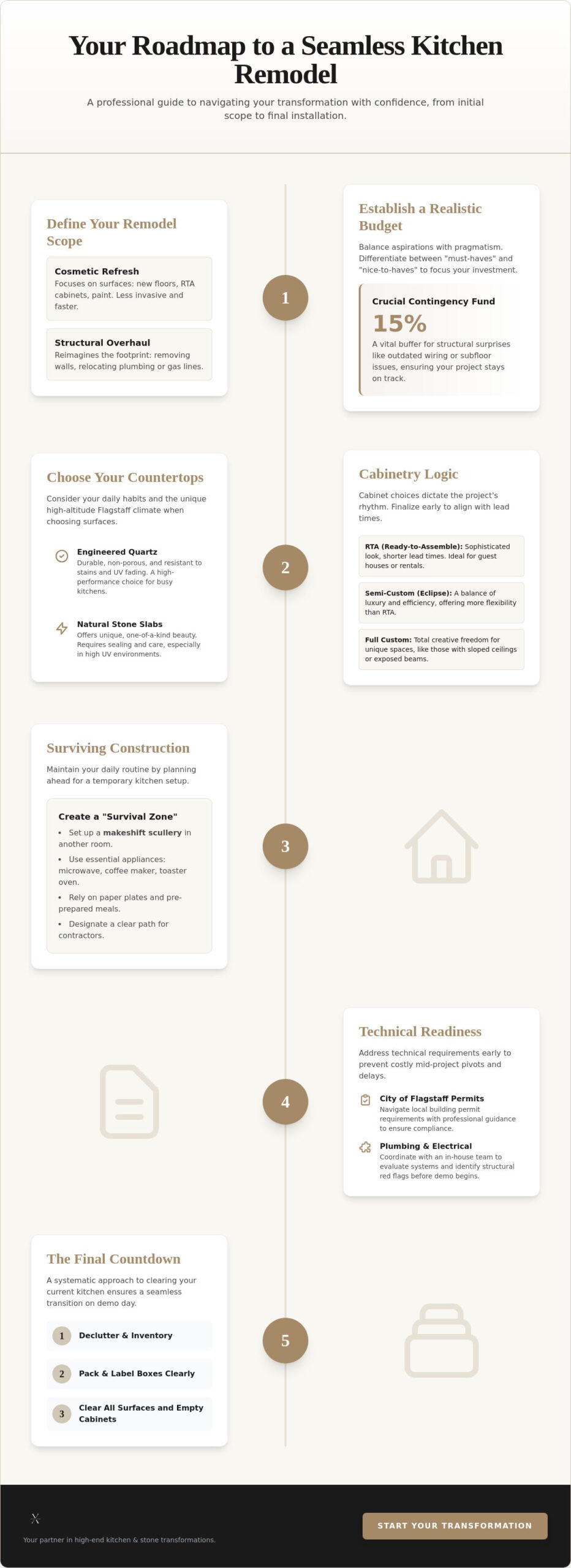
- How to establish a clear project scope and a realistic 2026 budget that includes a 15% contingency fund for structural surprises.
- The best way to evaluate high-performance materials, from comparing RTA versus semi-custom cabinetry to choosing between engineered quartz and natural stone slabs.
- Practical strategies for how to prepare for a kitchen remodel by creating a dedicated “Survival Zone” to maintain a functional daily routine.
- Essential technical steps for navigating City of Flagstaff building permits and coordinating with an in-house installation team for plumbing and electrical work.
- A systematic approach to decluttering and labeling your current kitchen inventory to ensure a seamless transition on demo day.
Phase 1: Defining Your Scope and the Flagstaff Budget Reality
Successful transformations begin with a clear definition of boundaries. When you start researching how to prepare for a kitchen remodel, your first decision is the most significant: are you looking for a cosmetic update or a full structural overhaul? A cosmetic refresh focuses on the aesthetic surface, perhaps replacing dated floors with luxury vinyl plank or installing new RTA cabinets. A structural remodel, however, reimagines the footprint of the home. This might involve removing load-bearing walls to create an open-concept flow or relocating gas lines for a professional-grade range. Defining this scope early prevents the project from expanding beyond your original intent.
Establishing a realistic 2026 budget requires a balance of aspiration and pragmatism. While Arizona construction costs sit approximately 6% lower than the national average according to CostFlowAI, local labor and material demand in Flagstaff can fluctuate. We recommend building a 15% contingency fund directly into your initial plan. This buffer ensures that if we discover outdated wiring or subfloor issues during demolition, your project maintains its momentum without financial strain. Differentiating between “must-haves,” like durable engineered quartz, and “nice-to-haves,” such as a built-in beverage station, prevents scope creep and keeps your investment focused on long-term value. For more inspiration on how to prioritize high-value features, you can read more from Bowkirk Kitchens & Bedrooms regarding their bespoke design philosophy.
Assessing Structural Possibilities
Think about how you move through your current space. If the layout feels cramped, you might want to open up your floor plan by removing walls. This often involves understanding the renovation process from a technical standpoint. Removing load-bearing walls requires precision and professional oversight. Our in-house installation team can evaluate your plumbing and electrical systems early in the design phase. Identifying these structural red flags before the first hammer swings saves time and prevents costly mid-project pivots.
The Flagstaff Design Aesthetic
Designing for the high desert and mountain peaks requires a specialized approach. You want to balance mountain rustic charm with modern efficiency to maximize your property’s value. In Flagstaff, the intense UV exposure at high altitudes is a real factor. It can fade lower-quality cabinetry finishes and impact certain stone surfaces over time. We suggest visiting an interior design showroom in Northern Arizona to see how natural stone slabs and hardwood flooring look under our unique local light. Seeing these materials in person helps you choose components that will remain vibrant for decades despite the mountain climate.
Phase 2: Selecting Materials for Durability and Style
Selecting the right materials is where your vision begins to take a tangible, permanent form. It is a critical step in how to prepare for a kitchen remodel, as the durability of these components determines the long-term value of your investment. In the high-altitude environment of Flagstaff, we must consider more than just aesthetic appeal. The materials you choose must withstand intense sunlight and the abrasive reality of mountain living. High-grade components act as the backdrop for your daily life, and firms like Instacabinets demonstrate how prioritizing quality ensures your kitchen remains a central gathering place for years to come.
Cabinetry Logic: RTA vs. Eclipse
The choice between different cabinet tiers often dictates your project’s rhythm. Many homeowners choose custom kitchen cabinets in Flagstaff to accommodate the unique architectural quirks found in mountain properties, such as sloped ceilings or exposed beams. These custom solutions allow for total creative freedom and technical mastery. If you are working on a guest house or a rental property, high-quality RTA (Ready-to-Assemble) cabinets offer a sophisticated look with significantly shorter lead times. For those seeking a balance of luxury and efficiency, Eclipse cabinetry provides semi-custom flexibility. Finalizing these selections early is essential; lead times for custom orders can vary, and having your cabinetry secured before the demo begins is the best way to ensure a stress-free transformation.
Countertop and Surface Selection
Your countertops serve as the hardworking center of the home. When deciding between engineered quartz and natural stone slabs, consider your daily habits. Natural stone offers a timeless, heat-resistant surface with dramatic veining that feels like a piece of art. However, engineered quartz has gained massive popularity for its low-maintenance, non-porous surface that resists staining. It is helpful to review the inventory from quartz countertop suppliers in Scottsdale to understand what styles are currently available in the region. This regional insight prevents you from falling in love with a slab that isn’t currently in stock.
Flagstaff winters bring specific challenges, namely snow, slush, and volcanic grit. While hardwood flooring is a classic choice, many local homeowners are turning to Luxury Vinyl Plank (LVP) for its waterproof nature and extreme durability. LVP provides the visual warmth of natural wood without the fear of moisture damage. To bring the entire look together, you should coordinate your cabinet hardware with your faucet and appliance finishes during this phase. Small delays in shipping for decorative tile or specialty pulls can stall a project at the finish line. Choosing these elements now ensures a fluid transition from the design phase to the final reveal. If you are unsure which materials best suit your lifestyle, exploring our premium material collections can help you visualize the final outcome.
Phase 3: The Logistics of Living Without a Kitchen
Mastering the “construction zone” lifestyle is often the most challenging hurdle for homeowners. While your mind might be on the beautiful natural stone slabs or the precision of the in-house installation team, your daily reality will shift significantly once demolition starts. Learning how to prepare for a kitchen remodel means designing a temporary lifestyle that preserves your comfort and sanity. By establishing a dedicated “Survival Zone” in a dining room, basement, or even a spacious laundry room, you can maintain a sense of normalcy while your primary cooking space is transformed.
A successful survival strategy relies on a robust meal-prepping plan. Relying on expensive takeout for weeks on end quickly drains your budget and impacts your health. We recommend preparing and freezing a variety of “one-pot” meals in the weeks leading up to your project. These can be easily reheated in a microwave or slow cooker, keeping your nutrition on track. For cleaning, set up a temporary dishwashing station in a laundry room or a large bathroom sink. Keep a plastic tub handy to transport dirty dishes from your survival zone to your cleaning station to minimize mess and spills throughout the house.
Pet safety is another critical logistical detail. The noise and activity of a remodel can be stressful for animals, and open construction areas pose safety risks. Install temporary gates to keep curious pets away from the work zone. If your pet is particularly sensitive to noise, consider arranging off-site boarding during the most intense days of demolition and structural remodeling.
Setting Up Your Temporary Kitchen
To keep your household running, focus on a few essential small appliances. An air fryer, electric kettle, microwave, and slow cooker can handle almost any meal requirement. It’s also vital to organize a dedicated “coffee station.” Maintaining your morning routine provides a psychological anchor amidst the chaos of a renovation. Stock up on eco-friendly disposable plates and cutlery during this phase. Reducing the volume of dishes you need to wash manually will significantly lower your stress levels during the construction period.
Managing the Household Environment
Northern Arizona dust is notoriously persistent, especially during the dry mountain winters. Seal off all non-construction areas with heavy-duty plastic sheeting to prevent fine particles from settling in your bedrooms and living spaces. You should also clear a wide, unobstructed path from your primary entry door to the kitchen. This ensures that heavy material deliveries, like hardwood flooring or cabinetry, move quickly and safely. Finally, take a moment to communicate the construction schedule with your neighbors. A quick heads-up about increased noise or delivery trucks helps maintain positive relationships throughout your project’s duration.
Phase 4: Technical Readiness and Permitting in Flagstaff
Technical readiness is the silent partner of a successful transformation. While selecting natural stone slabs is inspiring, ensuring your home’s infrastructure can support your vision is where the real mastery happens. A critical part of learning how to prepare for a kitchen remodel involves understanding the local regulatory environment. In Flagstaff, the city requires building permits for any project that alters electrical, gas, mechanical, or plumbing systems. If your plan involves structural remodeling, such as moving a sink or adding a new kitchen island with power, professional permitting is not optional; it is a safeguard for your property’s value and safety.
Beyond the legalities, your physical structure must be ready for the weight and precision of high-grade materials. Before installing heavy hardwood flooring or decorative tile, you must verify that your subfloor is perfectly level and structurally sound. Our in-house installation team conducts a rigorous assessment to ensure your flooring choice is compatible with the existing foundation. A pre-construction walkthrough with your project manager is the final step before the first hammer swings. This meeting finalizes the “demo day” plan, confirming exactly where utilities will be capped and how the transition between the kitchen and adjacent rooms will be handled.
Navigating Local Building Codes
Flagstaff’s building codes are designed to handle our unique climate and safety needs. Modern standards require GFCI outlets near water sources and specific venting for high-performance ranges. If you are pursuing structural changes, we must analyze the home’s overall integrity to ensure load-bearing requirements are met. For more specific answers on what your project might require, you can refer to the X Cabinet & Stone FAQ, which provides a comprehensive guide to local remodeling questions. It is better to address these technicalities during the design phase than to face delays later.
Preparing for In-House Installation
Precision is the hallmark of a professional execution. Before we can finalize the cuts for your engineered quartz or natural stone slabs, all appliances must be on-site or their specifications must be fully confirmed. Even a fraction of an inch can impact the seamless fit of your cabinetry. We also meticulously plan flooring transitions to ensure a fluid movement between your new kitchen and the rest of your home. If you want to ensure every technical detail is accounted for, you can schedule a technical consultation with our specialists today.
Phase 5: The Final Countdown to Demo Day
The final 48 hours before your renovation begins are a whirlwind of activity. It’s the moment when all your logistical planning transforms into physical action. As you finalize how to prepare for a kitchen remodel, your focus shifts. You move from high-level design to granular organization. Emptying every cabinet and drawer is your first priority. Use this as an opportunity to curate your belongings. Sort items into “keep,” “donate,” and “trash” piles. There is no sense in moving clutter into your beautiful new cabinetry once the project is complete.
Labeling is your best friend during this transition. Every box should clearly state its contents and its intended location in the new layout. This small step ensures that when your in-house installation team completes the project, you aren’t hunting for a whisk in a sea of unmarked cardboard. Speaking of logistics, confirm the dumpster placement with your contractor today. You want it close enough for efficiency but positioned so it doesn’t block your garage access or driveway. Finally, take comprehensive “before” photos. These serve as a powerful reminder of the transformation and provide essential documentation for insurance purposes should any unexpected issues arise during the structural remodeling phase.
Packing Like a Professional
Switch from cardboard boxes to heavy-duty plastic bins. These provide a superior seal against the fine construction dust that inevitably finds its way through the house. Create a “Week 1” box that stays accessible in your Survival Zone. This should contain your most-used spices, essential tools, and non-perishables. For sentimental or fragile items, move them to a low-traffic area far from the kitchen. Protecting these assets now prevents heartbreak during the heavy lifting and demolition phase.
Final Showroom Checklist
Perform a final review of your coordinated home materials at the design center. This is your last chance to double-check that every cabinet door style and paint color aligns with your original vision. Once you’re confident, meet with your lead installer. Establishing clear daily start and end times for the crew creates a steady, predictable rhythm for your household. This final alignment ensures everyone is working toward the same goal: a meticulous, breathtaking result that increases the value and beauty of your property.
Begin Your Transformation With Confidence
A successful kitchen renovation is the result of meticulous planning and a clear logistical roadmap. By defining your scope early, selecting mountain-durable materials, and mastering the survival logistics of a temporary kitchen, you’ve already mitigated the most common stressors of the process. Mastering how to prepare for a kitchen remodel ensures that you move from the initial spark of inspiration to the final physical result with total peace of mind. You aren’t just changing a room; you’re creating a high-quality, tangible asset that will serve as the heart of your home for decades.
Our team is here to bridge the gap between your conceptual ideas and a stunning reality. As specialists in structural remodeling with a comprehensive Flagstaff design center, we offer the technical mastery required for complex transformations. Our in-house professional installation team maintains total accountability for every detail, from the first permit application to the final tile placement. Ready to transform your home? Schedule a design consultation at our Flagstaff showroom today. Your dream kitchen is closer than you think, and we’re ready to help you bring it to life.
Frequently Asked Questions
How long does a typical kitchen remodel take in Flagstaff?
A professional kitchen transformation in Flagstaff generally takes between six and twelve weeks, depending on the complexity of the project. Cosmetic updates involving cabinet and countertop replacements move faster, while a full structural remodel involving wall removal or utility relocation requires additional time for permitting and specialized trades. We always recommend planning for seasonal mountain weather, which can occasionally impact material delivery schedules and the availability of specialized labor.
Do I need to move out during my kitchen renovation?
You don’t necessarily need to move out, but many homeowners choose to vacate during the most intensive phases, such as demolition or hardwood flooring installation. If you stay, it’s vital to have your “Survival Zone” fully established as discussed earlier in our guide. Living on-site allows you to see the daily progress firsthand, though the noise and dust of a professional renovation can be a significant adjustment for some families.
What is the best way to handle dust during a remodel?
The most effective way to manage Northern Arizona dust is to use heavy-duty plastic sheeting to create airtight barriers between the construction zone and your living areas. We also recommend sealing off HVAC vents in the kitchen to prevent fine particles from circulating through the rest of the home. Using professional-grade air scrubbers and maintaining a daily cleaning routine in your temporary living area helps keep the environment manageable for both residents and pets.
Can I install new cabinets over my existing flooring?
We generally advise against installing new cabinets directly over floating floors like Luxury Vinyl Plank (LVP) or hardwood flooring. These materials need to expand and contract with Flagstaff’s temperature shifts, and the weight of heavy cabinetry can cause buckling or permanent gaps. It is technically superior to install cabinets directly on the subfloor and then bring the flooring up to the toe-kicks for a cleaner, more durable result that protects your investment.
How much should I budget for hidden structural issues?
We recommend setting aside a contingency fund of at least 15% to 20% of your total project cost to cover hidden structural issues. In older Flagstaff homes, it’s common to discover outdated plumbing or electrical wiring once the walls are opened. Having this financial buffer ensures that your in-house installation team can address these technical mastery challenges immediately without stalling the momentum of your transformation or compromising the final aesthetic value of the work.
Is it cheaper to buy RTA cabinets or wait for custom ones?
RTA cabinets are typically more cost-effective and available on a much shorter timeline than custom options. They are an excellent choice for straightforward layouts or secondary spaces where speed is a priority. However, for a primary kitchen with unique architectural features, waiting for custom Eclipse cabinetry often provides a better long-term return on investment. The choice depends on whether you prioritize immediate project commencement or a highly specialized, tailor-made design that fits your unique lifestyle.
What appliances should I keep plugged in during construction?
You should keep your refrigerator plugged in, though it will likely need to be moved to a temporary location like the garage or dining room. Small, essential appliances like your microwave, coffee maker, and an air fryer are the workhorses of a successful remodel. Ensuring these remain accessible in your survival zone is a key part of how to prepare for a kitchen remodel while maintaining a functional and organized household routine.
How do I choose between quartz and granite for a high-altitude home?
Choosing between engineered quartz and natural stone slabs like granite often comes down to maintenance preferences and aesthetic desires. In high-altitude homes, both materials perform beautifully, but quartz offers a non-porous surface that doesn’t require regular sealing. Granite provides superior heat resistance and a unique, organic aesthetic that many feel complements the mountain landscape. We recommend visiting our design center to see how our unique local UV light interacts with different material finishes and veining patterns.


Be the first to comment