
Mastering the Tile and Wood Combination: A Flagstaff Remodeling Guide for 2026
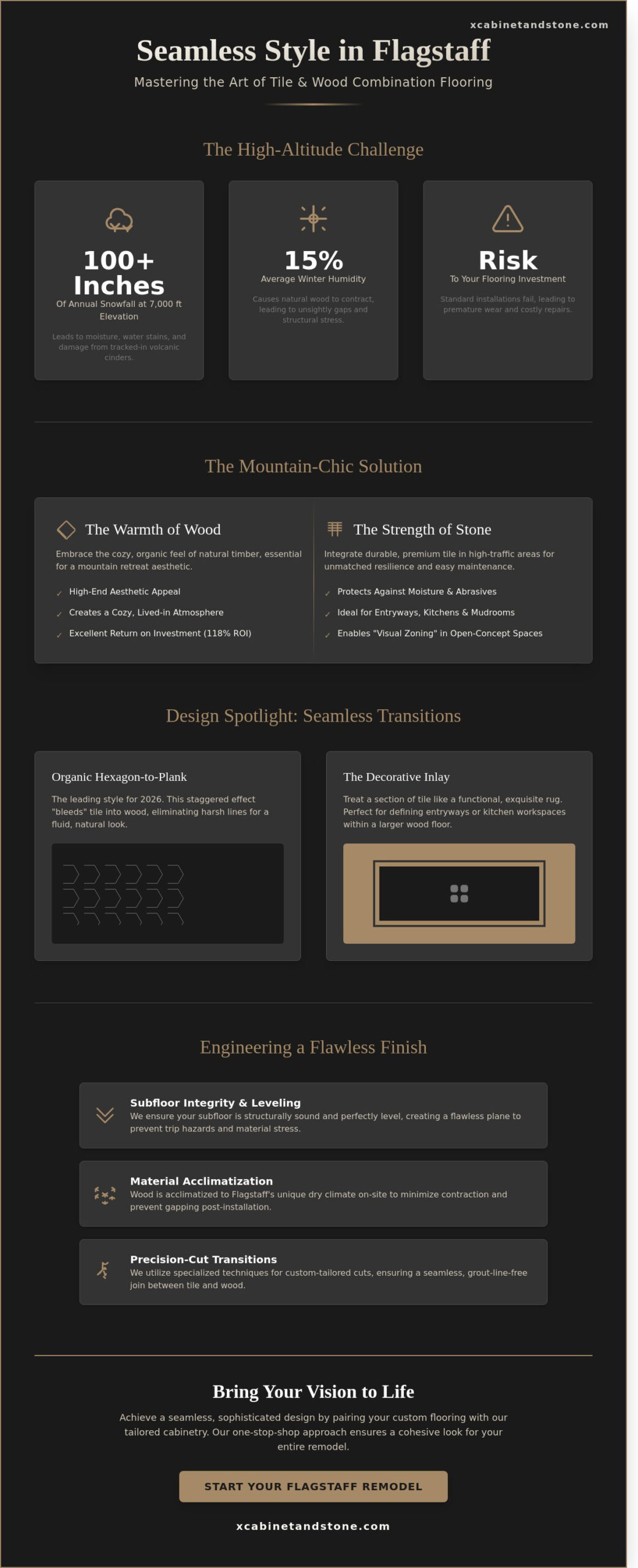
Last January, a Flagstaff homeowner watched as melting snow from their boots seeped into the grain of their brand new white oak floors, leaving a permanent water stain just inches from the entryway. It’s a common frustration in Northern Arizona, where our 15% average winter humidity and heavy snowfall demand more from our flooring than a standard installation can provide. You likely agree that while the warmth of natural timber is essential for a cozy mountain retreat, the practical need for durable stone in high-traffic areas is undeniable. Integrating a tile and wood combination shouldn’t mean settling for clunky transition strips or uneven floor heights that trip up your guests.
We’ll show you how to blend these exquisite materials to create a seamless, high-end look that stands up to the elements. You’ll discover the technical secrets behind precision-cut transitions and how to select custom-tailored materials that won’t gap when the dry Flagstaff air causes wood to contract. This guide provides a clear roadmap for your 2026 remodel, ensuring your vision of a stunning, durable home becomes a reality through expert craftsmanship and thoughtful design.
Key Takeaways
- Elevate your home’s aesthetic with “mountain-chic” designs that balance high-end beauty with the practical durability needed for Flagstaff’s snowy winters.
- Master the art of the tile and wood combination by exploring modern transition styles, including the popular organic hexagon-to-plank pattern for 2026.
- Navigate technical challenges like Northern Arizona’s low-humidity climate to prevent wood expansion and ensure perfectly level transitions between different material thicknesses.
- Streamline your remodel with a professional installation checklist that covers everything from structural subfloor integrity to precise material sourcing.
- Discover the “one-stop-shop” advantage of pairing your custom flooring with tailored cabinetry to create a seamless, sophisticated vision for your dream kitchen.
The Aesthetic and Functional Appeal of Tile and Wood Combinations in Flagstaff
Flagstaff residents live at an elevation of 7,000 feet, where the rugged environment dictates interior design choices. A tile and wood combination isn’t just an aesthetic preference; it’s a structural necessity for the modern mountain-chic home. This hybrid flooring approach blends the resilience of premium stone with the organic warmth of solid timber, creating a space that feels both luxurious and lived-in. By mixing materials, you achieve a custom-tailored look that reflects the natural contrast of the Coconino National Forest.
The functional benefits are immediate, particularly regarding the “Mudroom Effect.” Flagstaff averages over 100 inches of snow annually, which means homeowners constantly battle moisture and abrasive volcanic cinders. Tracking these elements onto traditional hardwood leads to premature wear and water damage. Integrating a durable tile landing at entryways creates a protective barrier. This strategy preserves your investment while maintaining the high-end appeal of natural wood throughout the rest of the home. In the Northern Arizona luxury market, these thoughtful details significantly impact property value. The 2022 Remodeling Impact Report from the National Association of Realtors suggests that new wood flooring can provide a 118% return on investment; protecting that wood with strategic tile placement ensures the value remains intact for decades.
- Visual Zoning: Define your dining area or kitchen workspace without the need for restrictive walls.
- Durability: Use porcelain or natural stone in high-traffic corridors to handle heavy boots and pets.
- Moisture Control: Prevent warping by using waterproof transitions in areas prone to spills or snowmelt.
Zoning for the High-Altitude Lifestyle
Open-concept floor plans are stunning, but they often lack a sense of purpose for individual areas. We use decorative tile in entryways to trap moisture and grit before it reaches your delicate hardwood. Strategic tile placement around kitchen islands creates a high-spill zone that’s easy to sanitize. This layout balances the warmth of wood with the exquisite durability of natural stone, ensuring your home remains a sanctuary even during the peak of winter. It’s about creating a seamless transition that serves your daily routine.
The Psychology of Mixed Materials
Texture transitions do more than protect your floors; they guide the eye through your living space. Flagstaff designers favor the organic contrast of cool stone against warm timber because it evokes a sense of transformation. As you move from a tiled mudroom to a wood-floored Great Room, your brain registers a shift from functional utility to cozy relaxation. This tile and wood combination signals that you’ve left the elements behind and entered a space designed for comfort. It’s a sophisticated way to tell the story of your home through tactile, premium materials.
Design Patterns and Transition Styles for a Seamless Look
The “Inlay” technique represents a sophisticated approach to floor design. By treating a section of tile as a decorative rug within a larger field of solid wood, you create a focal point that is both functional and exquisite. This method works exceptionally well in entryways where heavy foot traffic meets delicate hardwoods. To ensure the result feels intentional, focus on the color palette. Matching the grout color to the wood’s undertones creates a unified atmosphere, while high-contrast pairings, such as charcoal slate against light white oak, highlight the unique textures of each premium material. Understanding how to build cohesive color schemes for your Flagstaff remodel is essential to making these pairings feel intentional rather than accidental, especially given how Northern Arizona’s high-altitude light can shift the perceived hue of your materials.
Modern Geometric Transitions
Custom-tailored geometric play is transforming modern interiors. We use specialized techniques to “bleed” hexagon tiles into hardwood planks, creating an organic, staggered effect that eliminates the harsh lines of traditional remodeling. Herringbone and chevron tile patterns also provide a dynamic directional flow, guiding guests toward the heart of the home.
The staggered transition is defined as an interlocking layout where individual tiles and wood planks are hand-cut to weave together without a straight divider, serving as the leading trend for 2026.
Thresholds and Edging Solutions
Achieving a flush, seamless transition depends on technical mastery and precision-cut material matching. When both surfaces are leveled to within 1/16 of an inch, the result is a smooth walk-through experience that enhances home safety. For a minimalist, contemporary Flagstaff aesthetic, we often recommend 1/8-inch metal Schluter strips. These slim profiles provide a crisp, durable edge that protects the tile while remaining nearly invisible.
- Schluter Strips: Best for sleek, modern designs where a hidden transition is preferred.
- Wood T-Molding: Essential when floor heights differ by more than 1/4 inch to ensure structural integrity.
- Flush Grouting: A technique that uses color-matched flexible caulk to allow for the natural expansion of wood.
Our expert designers specialize in turning these technical challenges into stunning visual assets. If you’re ready to transform your flooring into a work of art, you can explore our premium stone and wood selections to find the perfect match for your vision. We prioritize durability and aesthetic value in every precision-cut installation, ensuring your investment lasts for decades.
Engineering the Transition: Technical Considerations for Northern Arizona
Achieving a flawless tile and wood combination in Northern Arizona requires more than just an eye for design; it demands a deep understanding of our high-altitude environment. Flagstaff’s humidity levels frequently plummet below 15 percent during the winter months. This dry air pulls moisture from natural hardwood, causing planks to contract, while porcelain or natural stone remains physically inert. Without expert planning, this structural tug-of-war can lead to unsightly gaps or even cracked grout lines.
Our team prioritizes the technical integrity of your subfloor to ensure your investment lasts for decades. We install high-performance moisture barriers beneath every transition, which is a vital step for homes facing our average annual snowfall of 100 inches. These barriers prevent snowmelt from seeping into the subfloor and compromising the adhesive bond of your tile or causing the wood to swell. By addressing these environmental factors during the engineering phase, we transform a potential maintenance headache into a durable, stunning focal point for your home.
Managing Material Movement
The physics of a tile and wood combination are unforgiving in our climate. Hardwood is a living material that breathes with the seasons, whereas tile is rigid. A 1/8-inch expansion gap is your best defense against floor buckling. We never bridge this gap with rigid grout, as the natural movement of the wood would cause the grout to crumble within a single season. Instead, we use color-matched flexible sealants or 100 percent silicone caulks. These professional-grade materials mimic the appearance of grout while providing the elasticity needed to accommodate material shifts without losing their seal.
Solving Floor Height Discrepancies
Creating a seamless walk-through experience requires meticulous calculation of “stack height” before the first plank is laid. A premium natural stone tile set in a thick bed of thinset can easily reach a height of 3/4 of an inch. In contrast, modern luxury vinyl plank (LVP) might only measure 6mm to 8mm in thickness. To prevent tripping hazards, we utilize self-leveling underlayments to build up the lower sections of the subfloor. This creates a perfectly flat transition zone where different materials meet at the exact same elevation. Our in-house installation experts handle these precision-cut transitions with master-level craftsmanship, ensuring your “dream home” vision is never interrupted by an uneven floor or a bulky transition strip.
- Precision-Cut Alignment: We ensure every edge is straight and true for a high-end, custom-tailored finish.
- Advanced Adhesives: We select premium bonding agents specifically rated for the temperature swings found in Northern Arizona.
- Seamless Integration: Our one-stop-shop approach means we manage both the stone and wood components, ensuring total accountability for the final result.
The Professional Installation Checklist: Planning Your Remodel
Achieving a flawless tile and wood combination requires more than an eye for design. It demands a rigorous technical strategy. When you transition from the conceptual phase to the actual installation, the details of craftsmanship determine whether your floor lasts for decades or fails within months. A successful remodel bridges the gap between high-end aesthetics and structural durability through a disciplined, step-by-step approach.
Pre-Installation Material Audit
Success begins by verifying that your luxury flooring showroom Northern Arizona selections are physically compatible. You must check for batch consistency in natural stone and wood grain to ensure a uniform look across the transition. In Flagstaff, the 7,000-foot elevation and low humidity mean wood flooring must acclimatize on-site for at least 72 hours. This prevents the planks from shrinking or warping after the professional team completes the install.
Structural and Safety Requirements
The subfloor serves as the foundation for your investment. It must support the weight of premium stone without deflection, typically requiring a stiffness rating of L/360 or better. If your tile and wood combination occurs during a structural remodeling kitchen project, identify load-bearing walls before altering the floor plan. We always test for moisture levels in the concrete or plywood base, ensuring readings are below 12% for wood to prevent future adhesive failure.
Follow this five-step checklist to ensure your installation meets the highest professional standards:
- Step 1: Material Sourcing. Ensure both the tile and wood are on-site simultaneously. This allows for precise depth testing, as different materials often have varying thicknesses that require subfloor height adjustments.
- Step 2: Subfloor Inspection. Verify the structural integrity of the base. We look for levelness within 1/8 inch over a 10-foot span to prevent “lippage” where the tile meets the wood.
- Step 3: Layout Mapping. Dry-laying the transition is essential. This step lets you visualize the pattern and adjust the focal points before any adhesive touches the floor.
- Step 4: Precision Cutting. Use specialized tools for each material. We utilize high-grade wet saws for stone to prevent chipping and precision miter saws for wood to ensure tight, seamless joints.
- Step 5: Final Sealing. Protect the joint from Northern Arizona grit. Cinders and fine dirt can act like sandpaper, so applying a high-quality sealant to the grout and the wood edge is vital for long-term beauty.
Our team treats every home as a masterpiece in progress. If you’re ready to see how these materials can transform your space, contact our expert designers today to start your consultation.
Bringing Your Vision to Life: Custom Flooring and Cabinetry in Flagstaff
Achieving a high-end look requires more than just picking two beautiful materials. It’s about the synergy between every surface in the room. When you choose a tile and wood combination, you’re creating a foundation that must harmonize with your vertical surfaces. Our “One-Stop-Shop” model eliminates the fragmented stress of traditional remodeling. By coordinating your flooring and cabinetry under one roof, you ensure that the walnut grains in your floor don’t clash with the cherry finish on your island. We take total accountability for the design, ensuring every element speaks the same aesthetic language.
Coordinating Surfaces and Cabinetry
Your flooring shouldn’t exist in a vacuum. We specialize in pairing your chosen tile and wood combination with custom kitchen cabinets in Flagstaff to create a cohesive, stunning aesthetic. Our designers help you match the cool undertones of slate tile with the crisp lines of Eclipse cabinetry or the warmth of RTA wood finishes. We also look at the finer details that tie a room together. You can consult our cabinet hardware guide to find matte black or brushed gold pulls that echo the metal transition strips used in your floor seams. For a deeper understanding of how your flooring tones interact with cabinetry finishes and stone countertops, our guide to cohesive color schemes for your Flagstaff home remodel walks you through the professional process of unifying every surface in the room.
The Flagstaff Design Center Experience
Visiting our interior design showroom Northern Arizona transforms the planning phase from overwhelming to inspiring. You’ll see full-scale vignettes that showcase how different textures interact under realistic lighting. Our team uses local expertise to account for Flagstaff’s 15 percent average humidity fluctuations, ensuring your wood won’t warp away from your tile during dry winters. We help you visualize complex transitions before the first cut happens, providing a roadmap for a flawless, durable build that withstands the mountain climate.
The secret to a stunning floor lies in the execution. Our in-house installers are the backbone of our precision-cut promise. They understand the specific height offsets required to make a tile-to-wood seam feel perfectly level underfoot. Because we manage both the cabinetry and the flooring, we avoid the finger-pointing that often occurs between separate subcontractors. We focus on the “vision-to-reality” framework, delivering a space that feels like a singular, handcrafted work of art. This dedication to craftsmanship ensures your investment adds lasting value and domestic beauty to your home.
Elevate Your Flagstaff Home with Expert Transitions
Your home deserves a foundation that balances exquisite beauty with the rugged durability required for Northern Arizona’s unique climate. By mastering the tile and wood combination, you create a seamless flow that handles Flagstaff’s seasonal shifts while elevating your interior’s aesthetic. Since 2021, our experts have helped homeowners navigate these technical challenges, ensuring that expansion gaps and subfloor heights are calculated with absolute precision. We take pride in our comprehensive design-to-build service, which eliminates the stress of managing multiple contractors. We handle everything. From the initial vision to the final, premium finish, our in-house professional installation team manages every detail with a custom-tailored approach. You don’t have to choose between high-end style and practical reliability. It’s time to turn your 2026 remodeling goals into a stunning reality that serves as the backdrop for your life’s best moments.
Ready to transform your space? Visit our Flagstaff Showroom today for expert design guidance.
Frequently Asked Questions
Can I combine tile and wood without a transition strip?
You can achieve a seamless tile and wood combination by using a thin bead of flexible, color-matched caulk instead of a bulky transition strip. This method requires precision-cut edges and perfectly level subfloors to maintain a professional, high-end look. According to the National Wood Flooring Association, leaving a 1/8-inch expansion gap filled with flexible sealant allows the wood to move naturally without disrupting the tile.
Which should be installed first: the tile or the wood flooring?
Install the tile first because it involves wet mortar and messy grout that can easily damage unfinished or pre-finished wood. Setting the tile first establishes a fixed height, allowing our craftsmen to sand or shim the wood for a perfectly flush meeting point. Industry standards suggest completing all wet trades 7 days before wood installation to ensure subfloor moisture levels remain below 12 percent.
Does mixing flooring types hurt the resale value of my Flagstaff home?
A high-quality tile and wood combination typically boosts resale value by defining functional zones in open-concept layouts. Data from the National Association of Realtors shows that 54 percent of home buyers are willing to pay more for hardwood floors, and custom tile inlays add an exquisite designer feel. In the Flagstaff market, these deliberate design choices signal a premium, custom-built home rather than a standard builder-grade interior.
How do I clean the joint where the tile meets the wood?
Clean the joint using a soft-bristled nylon brush and a pH-neutral cleaner to avoid degrading the flexible sealant. Don’t use steam mops near the transition, as the 212-degree Fahrenheit vapor can penetrate the joint and cause the wood edges to swell or cup. A simple microfiber cloth dampened with a 10:1 water-to-vinegar solution works efficiently for routine maintenance without leaving a dulling residue.
What is the best tile to use with hardwood in a kitchen?
Porcelain tile is the superior choice for kitchens due to its 0.5 percent or lower water absorption rate, which protects your subfloor better than ceramic options. Pair a matte-finish porcelain with a natural oak or hickory to create a stunning visual contrast that handles high foot traffic. This pairing ensures your kitchen remains the heart of the home while offering the durability required for daily spills and heavy appliances.
How do I handle the height difference between thick tile and thin LVP?
Resolve height discrepancies by applying a self-leveling underlayment to the lower section or using a specialized reducer strip. If the tile sits 1/4 inch higher than the LVP, a custom-milled transition piece creates a safe, trip-free path. Our team often uses plywood underlayment sheets to build up the subfloor, ensuring the two materials meet at a single, elegant plane that feels solid underfoot.
Will the wood expand and crack my grout line?
Rigid grout will inevitably crack because wood expands and contracts by up to 1/16 of an inch during seasonal humidity shifts. Use a color-matched 100 percent silicone caulk at the junction instead of standard cementitious grout. This flexible material absorbs the natural movement of the timber while maintaining a waterproof seal that looks identical to your surrounding grout lines, preserving the integrity of your home.
Can I use this combination over radiant floor heating?
You can use a tile and wood combination over radiant heat if you select engineered hardwood and porcelain tile, as both materials conduct heat efficiently. Engineered wood is 30 percent more stable than solid planks, reducing the risk of gaps when the 80-degree Fahrenheit heating system is active. Ensure your installer uses a heat-rated thin-set and leaves adequate expansion perimeters to accommodate the thermal changes in the floor.


Be the first to comment